Ferns, feathers and female photographers
It’s International Women’s Day (Friday 8th March in case you’re reading this from the future), so I thought I’d introduce you to one of my favourite female photographers.
Anna Atkins was a British botanical artist, collector and photographer and was the first person EVER to illustrate a book using photographic images.
In particular she used the cyanotype process to make her photographs - a process which is still around today and I absolutely love.
And not just because you can create your own cyanotypes at home without the need for a dark room, which is good because I currently don’t have one of those.
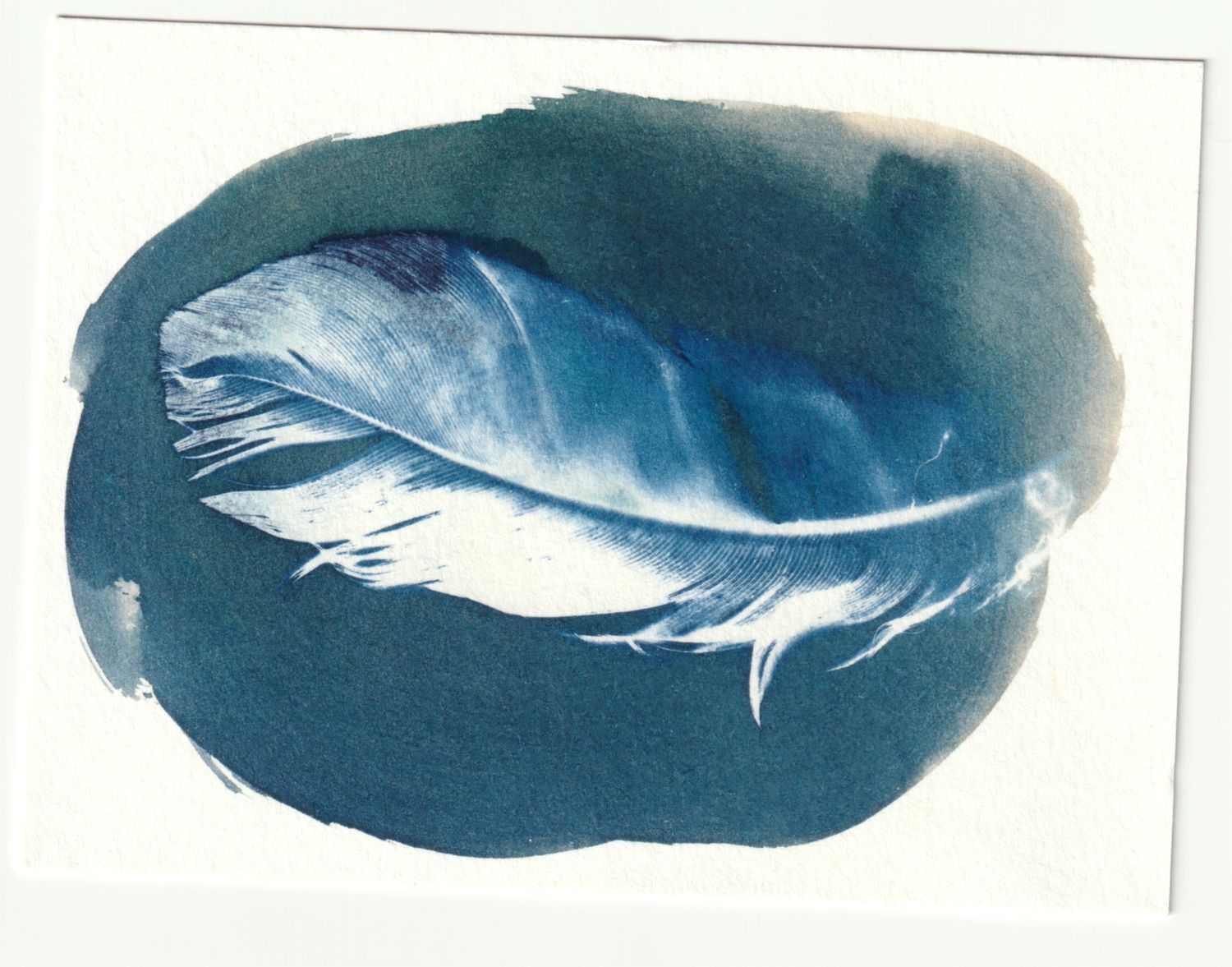
This is a scan of one of my own cyanotypes. Feathers and ferns are my favourite things to capture using this process.
Before Atkins published her book on British algae in 1843, botanical images would have been restricted to traditional printing processes such as engraving or woodcuts.
In fact, in her early twenties, Anna had completed 256 scientifically accurate drawings of shells, which were published in a catalogue.
Luckily for Anna, she was friends with William Henry Fox Talbot, who is the British inventor of the photographic process. But it was Anna who saw the potential in the cyanotype photographic process as an option to document her botanical specimens.
There are thought to be 20 known copies of Anna's book and she made every print herself, which is amazing when you think about it.
If you want learn more about Anna Atkins this article from the Natural History Museum is a good overview of her work, complete with photographs of her images: Click here but an internet search of her name, now you know it, will deliver as much information as you’ll ever need.
One day I will do an overview of the cyanotype process should you wish to have a go yourself (it’s fun, I promise). But as it requires quite a lot of sunlight I’ll be saving that for the summer months.
Unless I buy a UV light first, which is entirely possible.
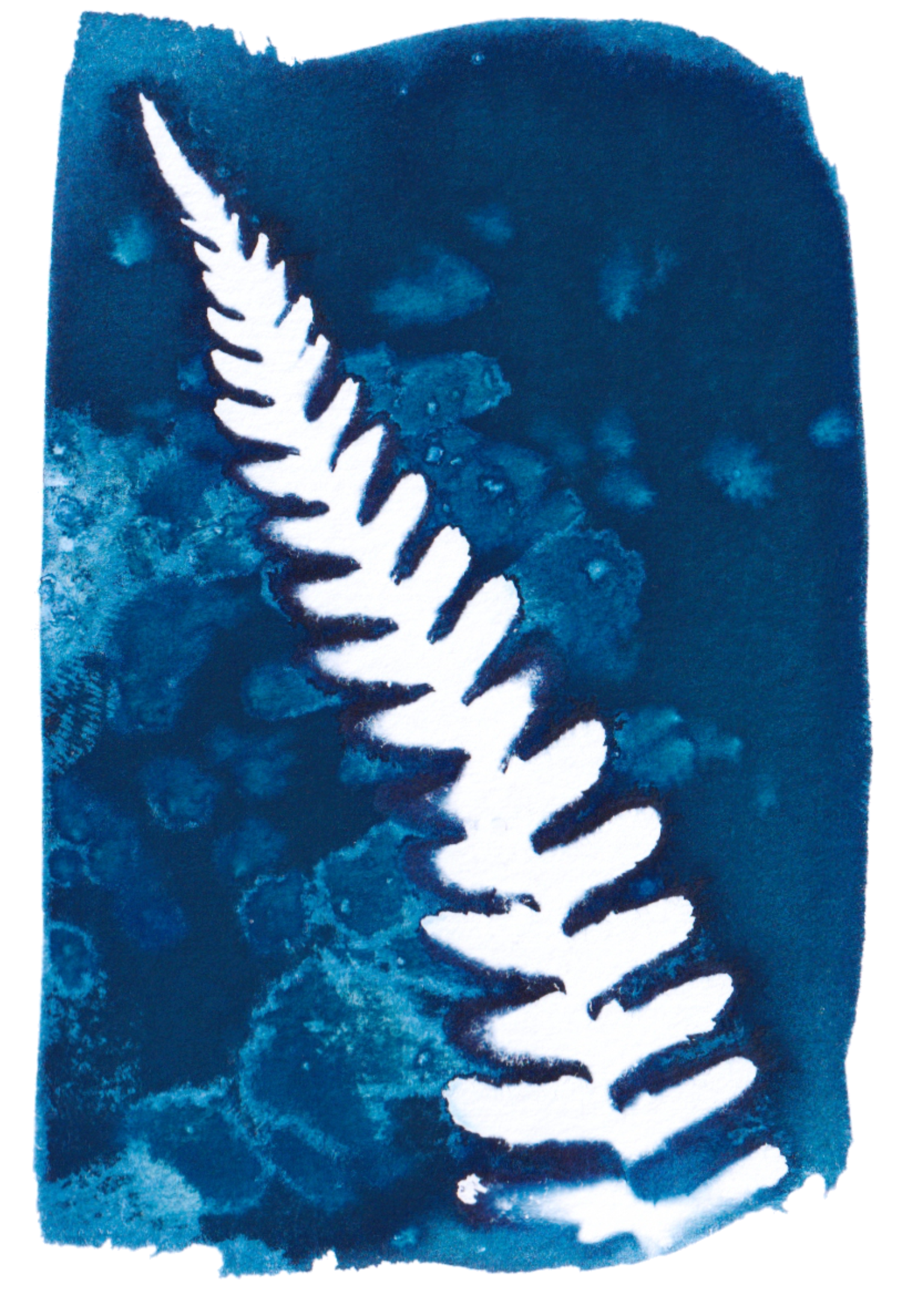
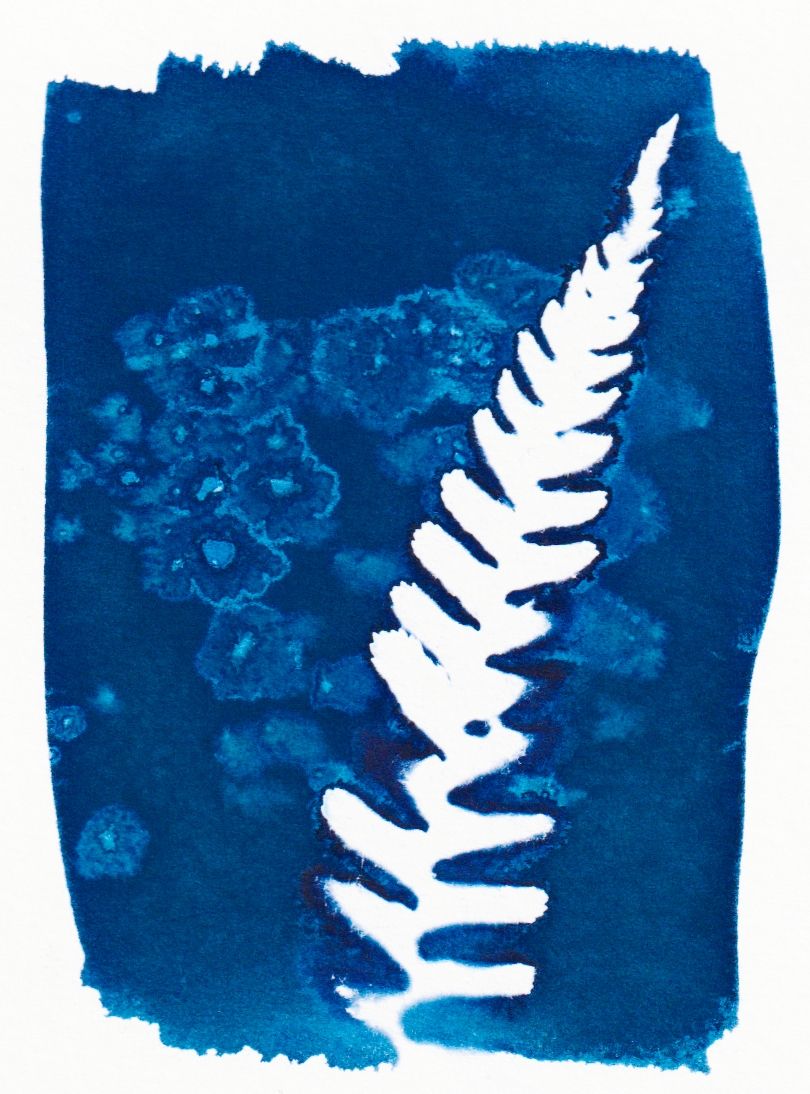
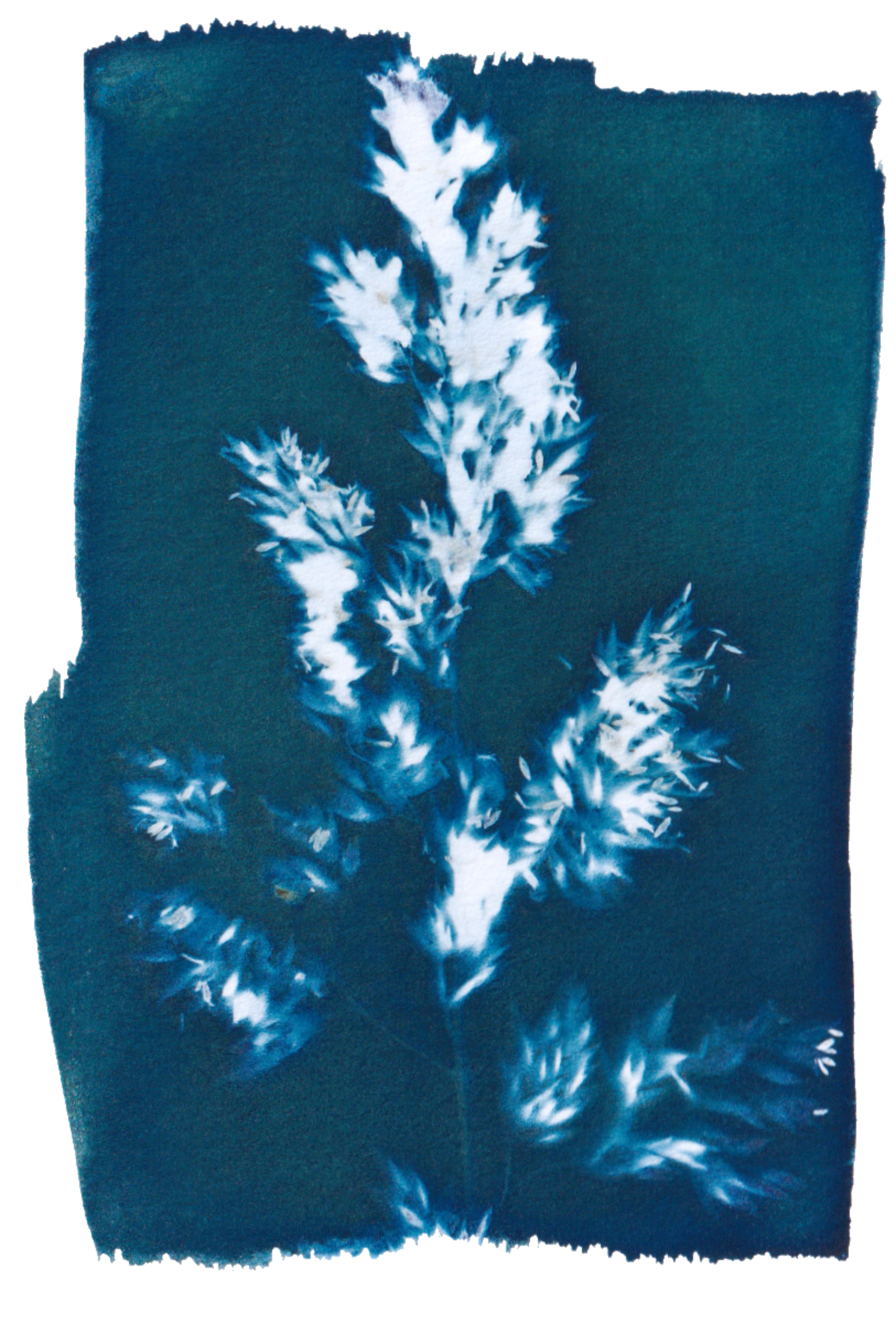
Some more of my own cyanotypes, two of fern leaves and one of grass seeds. I agree with Anna Atkins, cyanotypes really do work well with plants.